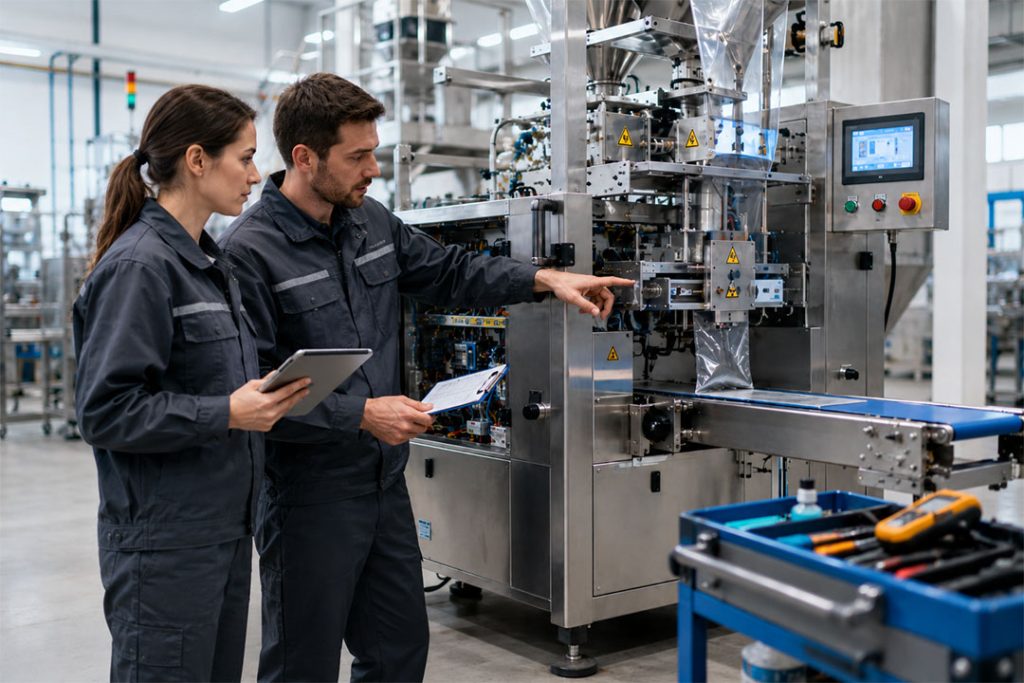


Packaging Machine Maintenance: How to Keep Equipment Running Stably
For manufacturers, purchasing a packaging machine is only the first step. Long-term machine performance depends on correct operation, regular maintenance and timely technical support. A well-maintained packaging machine can help reduce downtime, improve production stability and extend service life.
Packaging machines usually work in continuous production environments. They may handle granules, powders, liquids, hardware parts or daily necessities every day. During operation, mechanical parts, electrical systems, sealing components, feeding systems and sensors all need proper attention. If maintenance is ignored, small problems may become production delays.
The first step in packaging machine maintenance is regular cleaning. Different products create different cleaning needs. Powders may leave residue in filling parts, granules may create dust, liquids may cause dripping, and hardware parts may leave small particles. Keeping the machine clean helps reduce contamination, improve accuracy and prevent unnecessary wear.
Sealing parts should be checked frequently. For machines using heat sealing, sealing temperature, pressure and sealing time affect package quality. If sealing is weak, products may leak or bags may open during transport. If temperature is too high, packaging film may be damaged. Operators should check sealing bars, heating elements and film contact areas regularly.
Feeding systems also require attention. For granules, weighing systems should remain accurate and clean. For powders, screw feeders and hoppers should be checked to prevent blockage. For liquids, filling pumps and pipelines should be inspected to avoid leakage or unstable filling volume. For hardware products, counting and feeding systems need to be checked for jamming or inaccurate counting.
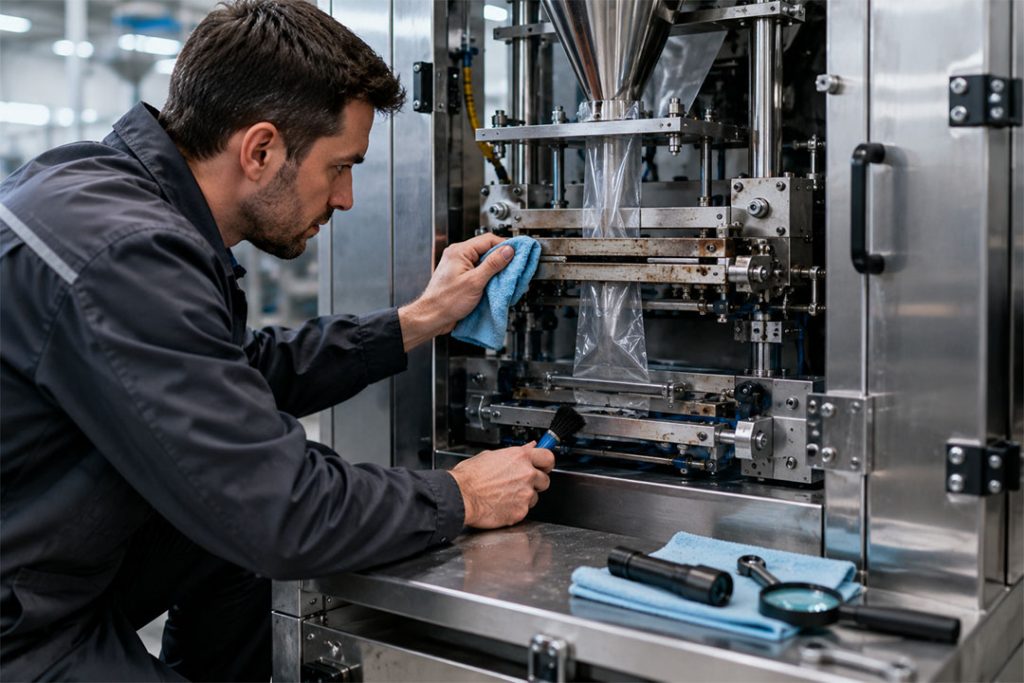
Electrical systems are another important part of maintenance. Sensors, switches, wires and control panels should be kept in good condition. Loose wiring or damaged sensors can cause machine errors. Clear circuit diagrams are useful for troubleshooting, especially when remote technical support is needed.
Mechanical parts should be inspected regularly. Moving parts, chains, belts, bearings and cutting systems may wear over time. Lubrication, tightening and replacement should be carried out according to machine instructions. Regular inspection can prevent sudden breakdowns and reduce repair costs.
Operators also play an important role in machine stability. Even a well-designed machine can have problems if it is operated incorrectly. Proper training helps operators understand machine settings, safety procedures, daily checks and basic troubleshooting. Manufacturers should make sure operators know how to start, stop, adjust and clean the machine correctly.
Spare parts availability is another important factor. Some parts may need replacement after long-term use. Buyers should confirm whether the supplier can provide spare parts quickly. For overseas customers, spare parts supply can directly affect machine downtime. Keeping common spare parts in stock can reduce waiting time when problems occur.
Preventive maintenance is more effective than emergency repair. Instead of waiting for a machine to stop, factories should create a maintenance schedule. Daily checks, weekly cleaning, monthly inspection and regular part replacement can help maintain stable operation. Maintenance records are also useful for tracking machine condition.
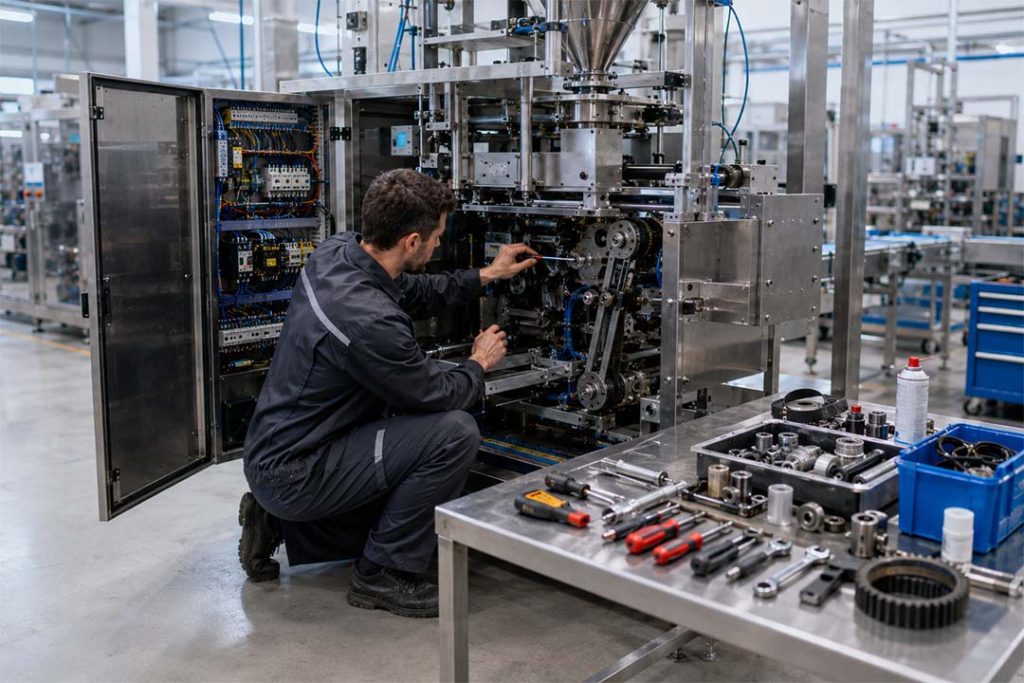
When selecting a packaging machine supplier, buyers should consider maintenance support before purchasing. A reliable supplier should provide mechanical drawings, circuit diagrams, operation guidance and technical service. Online support can help solve many problems through video calls or messages. For more complex issues, on-site service may be needed.
Different machine types may have different maintenance priorities. A vertical form fill seal machine requires attention to film feeding, sealing and cutting. A doypack machine needs regular checks for pouch picking, opening and sealing. A filling machine requires cleaning and inspection of filling parts. A labeling machine needs accurate positioning and sensor adjustment.
Good maintenance also improves packaging quality. Stable machines produce more consistent packages, reduce waste and improve production planning. For manufacturers serving distributors or retail channels, consistent packaging can help protect brand image and delivery reliability.
In conclusion, packaging machine maintenance is essential for stable production. Regular cleaning, sealing checks, feeding system inspection, electrical maintenance, operator training and spare parts support all contribute to long-term machine performance.
Lakerpack focuses on practical packaging machine support, including technical service, spare parts assistance and maintenance guidance. If you are looking for packaging equipment that supports long-term production, contact Lakerpack with your product and packaging requirements.