


How to Choose the Right Filling Pump for Your Bottle Filling Equipment? A Professional Selection Guide
In bottle filling production, the filling pump is often referred to as the “heart” of the entire production line. Choose correctly, and you get high filling accuracy, stable operation, and low maintenance costs. Choose wrongly, and you may face a cascade of problems—inaccurate filling, frequent downtime, product contamination, and more. As a filling equipment manufacturer, we understand that selecting a pump is essentially choosing a technical solution that precisely matches your product characteristics and production goals.
Step 1: Understand Your Material Properties – This Determines “What Type of Pump to Use”
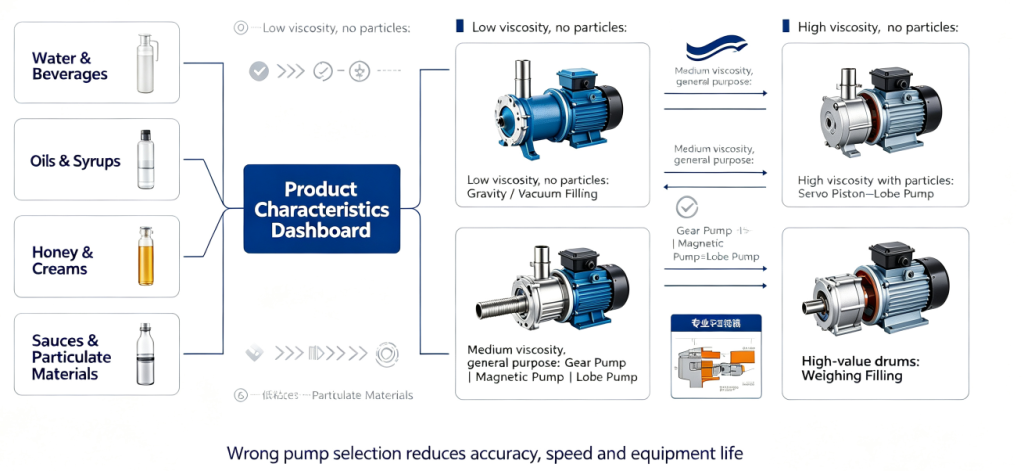
The physical form of your material directly dictates the pump selection direction. Choosing the wrong type will significantly compromise accuracy, speed, and equipment lifespan.
-
Low-viscosity, particle-free liquids (water, beverages, liquor, vinegar, etc.) : Prioritize atmospheric/gravity/vacuum filling machines. They offer high speed, low cost, and stable operation, but are not suitable for pastes or particle-containing materials.
-
Medium-viscosity liquids (oils, daily chemical liquids, syrups, lubricants, etc.) : Gear pumps/magnetic pumps/lobe pumps are recommended. These positive displacement pumps enable continuous filling, relatively high speed, and moderate accuracy. Magnetic gear pumps use magnetic coupling, eliminating shaft seals and the risk of leakage or motor burnout from overload.
-
High-viscosity or particle-containing materials (sauces, hot pot bases, creams, honey, etc.) : Choose servo piston fillers or lobe pumps. These types do not clog, deliver accurate metering, and do not damage particulate ingredients in the material. Lobe pumps, with their minimal clearance between rotors and housing, gently push material toward the outlet as the rotors turn—ideal for semi-fluid and particle-laden products.
-
Drum filling, high-value liquids, and applications demanding ultra-high accuracy : Weighing-type fillers are the top choice. They meter by mass, unaffected by changes in liquid density or temperature, delivering the highest accuracy.
A quick rule of thumb: For low-viscosity, high-speed, cost-sensitive applications, choose atmospheric/vacuum pumps. For general medium-viscosity, choose lobe/gear pumps. For high-viscosity or particle-filled products requiring accuracy, choose servo piston pumps. For large drums and high-value liquids requiring ultra-high precision, choose weighing systems.
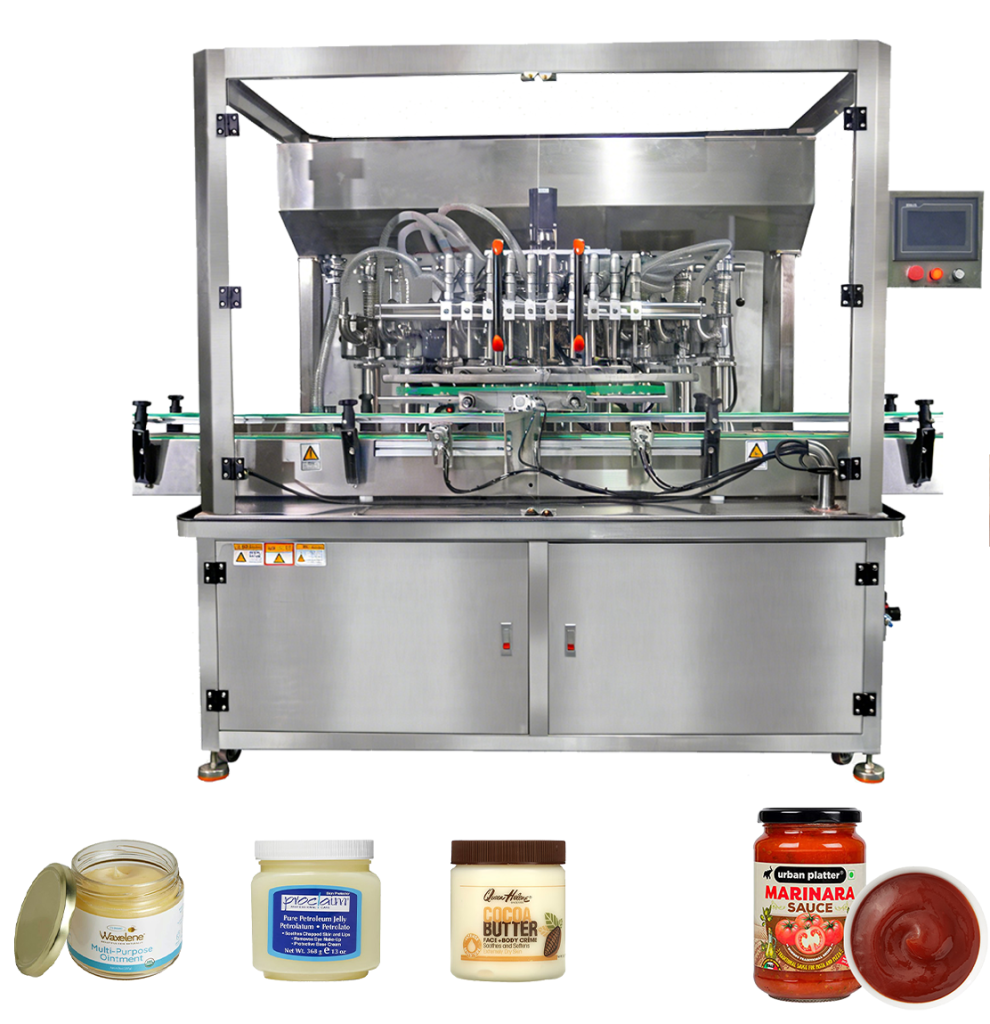
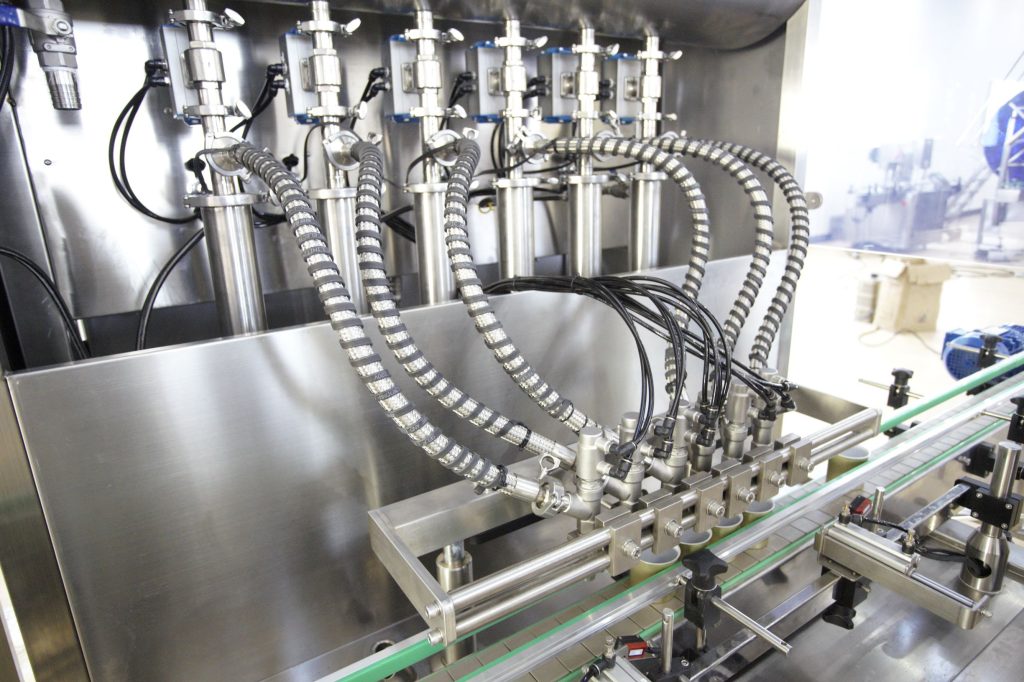
Step 2: Evaluate Filling Volume and Accuracy Requirements – This Determines “Size and Configuration”
Filling volume range and accuracy specifications directly impact equipment structure and investment costs.
Filling Volume Reference:
-
1–100ml (pharmaceuticals, essential oils, reagents) : Piston pumps, micro-pumps, and peristaltic pumps are preferred.
-
50–500ml (beverages, condiments, daily chemicals) : Atmospheric, piston, and lobe pumps are all suitable.
-
500ml–5L (cooking oils, laundry detergents, large beverage bottles) : Flow-meter type, piston, or weighing type are recommended.
-
5L and above (drums) : Only weighing-type fillers can reliably ensure accuracy.
Accuracy Reference:
-
General food and drinking water : Accuracy of ±1% to ±1.5% is sufficient; atmospheric/vacuum pumps meet the requirement.
-
Condiments, daily chemicals, beverages : Require ±0.5% to ±1%; lobe/gear pumps are recommended.
-
Pharmaceuticals, essential oils, high-value products : Require ±0.1% to ±0.5%; servo piston or weighing-type fillers are mandatory.
A critical reminder: Higher accuracy comes with a higher price tag. We recommend setting realistic accuracy targets based on your product value and regulatory requirements—don’t blindly pursue “the higher, the better.”
Step 3: Consider Cleaning and Maintenance Requirements – This Determines “Long-Term Operating Costs”
After prolonged operation, filling equipment requires cleaning between batches or product changeovers. If cleaning is difficult, it not only increases labor costs but also creates cross-contamination risks.
-
Peristaltic/hose pumps : Liquid contacts only the inner wall of the hose—the sole consumable part. Replacement takes just minutes, and cleaning is very convenient, making them ideal for production scenarios requiring frequent product changes.
-
Food/pharmaceutical-grade applications : Components that contact materials must be made of 316L stainless steel and support CIP (Clean-in-Place) functionality to meet hygiene standards.
Additionally, the replacement cycle and cost of wear parts—such as seals and bearings—are key indicators of long-term operating costs. During selection, request the pump’s maintenance manual and spare parts list from the manufacturer.
Step 4: Assess Production Capacity and Line Integration – This Determines “Overall Line Coordination”
Pump selection cannot be made in isolation—it must be considered together with overall line capacity, bottle type compatibility, and integration with upstream and downstream processes.
-
Capacity Matching : Determine the number of filling heads based on target output (bottles per hour, BPH). For example:
-
300–1000 BPH: 2 heads, 4 heads
-
1000–3000 BPH: 6 heads, 8 heads
-
3000–8000 BPH: 12 heads, 16 heads
-
-
Line Integration : Consider whether the system needs to operate in conjunction with unscramblers, rinsers, dryers, cappers, labelers, and coders. Unconventional bottles, glass bottles, and plastic bottles each have different requirements for conveying and clamping mechanisms.
Summary: Pump Selection Is Ultimately About “Fit”
There is no single “best” pump—only the pump that best fits your needs. The essence of filling pump selection is making a balanced decision across four dimensions: “material properties — accuracy requirements — cleaning and maintenance — capacity and integration.” Before making your choice, we recommend preparing basic parameters—material viscosity, particle content, corrosiveness, fill volume, target accuracy, and shift output—and engaging in thorough technical discussions with the equipment manufacturer.
As a professional filling equipment manufacturer, we provide comprehensive solutions—from pump head selection and piping design to full-line integration—tailored to your actual materials and production capacity. Contact our technical team today for one-on-one selection guidance.